Regional and remote house sitting in Australia is a suburban sit with four distances added: the drive to an after hours vet, whether there is mobile coverage at the house, how far the fuel and groceries are, and how long the property runs itself when the power fails or the road closes. Settle those four before you accept and the rest is easier than a city sit, with fewer applicants and longer, more flexible stays.
Remoteness is defined as distance from services, and that is the only thing that changes
The Australian Bureau of Statistics Remoteness Structure sorts the country into Major Cities, Inner Regional, Outer Regional, Remote and Very Remote "on the basis of a measure of relative access to services". That is the whole article in one line. Nothing about the animals changes when you drive inland. What changes is how long it takes to reach help.
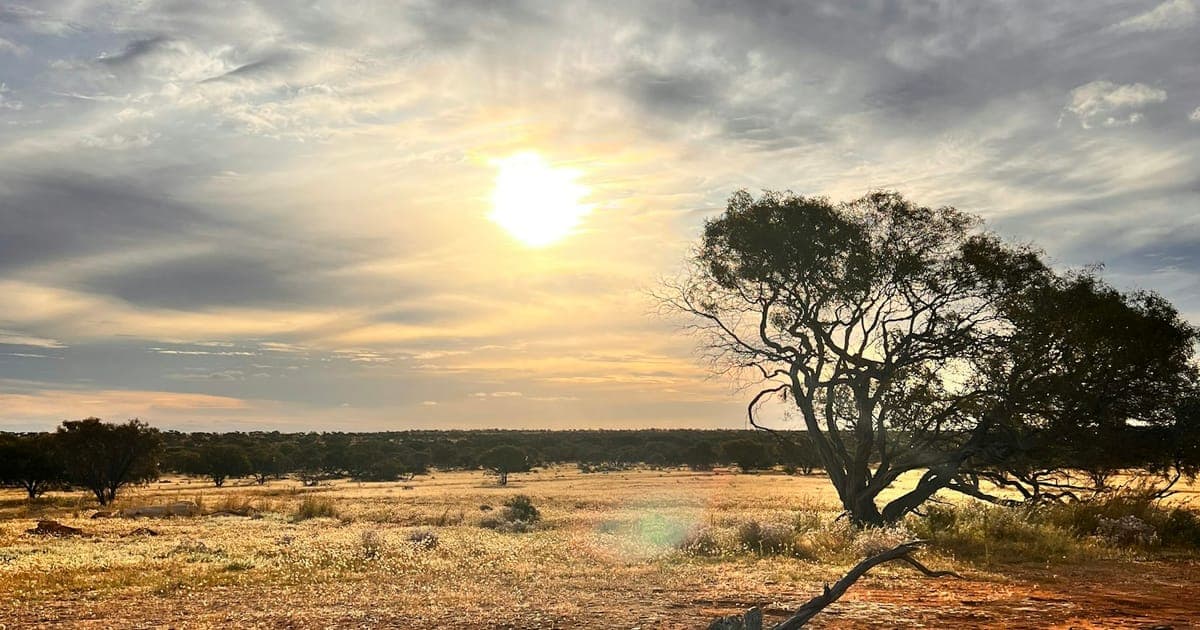
So the word regional in a listing tells you almost nothing. A sit at Bacchus Marsh in Victoria behaves like a suburb with a longer drive to the shops. One on the Eyre Peninsula in South Australia, near Katherine in the Northern Territory, or west of Longreach in Queensland does not. The ABS Regional population release for 2024-25 has regional Australia up 94,700 people, against 324,700 in the capitals.
Mobile coverage decides whether the emergency plan works at all
Check this first, because every other arrangement assumes you can make a call. The Australian Communications and Media Authority is clear on how emergency calls work: "You can call 000 even if your mobile provider does not have network coverage in the area. Your call to 000 will be carried on any available mobile network." Then the limit. "You must be in the coverage area of one of the mobile providers in Australia to make emergency calls." The ACMA also states you cannot contact 000 or 112 by text message, so a bar that pushes an SMS out will not necessarily carry a call.
Since 31 March 2026 you can check it properly. Under the ACMA's mobile coverage maps standard, providers had to publish standardised 4G and 5G maps by 30 June 2026 in four categories, good, moderate, basic or no coverage, so carriers can finally be compared like for like. Of areas mapped as no coverage, the ACMA says service is "expected to be very limited, inconsistent or non-existent". Check the property address on your own carrier's map, not the nearest town.
Two more things. The Emergency+ app uses your phone's GPS to give the Triple Zero operator a street address when you cannot describe where you are. And the State Emergency Service is not reachable on 000: every SES unit in Australia is on 132 500.
| What the property has | What to expect during the sit | What to ask before you accept |
|---|---|---|
| Good mobile coverage | Calls, data and a hotspot behave normally | Which carrier, since a second may not reach |
| Basic or no mobile coverage | Triple Zero needs some carrier's signal, and cannot be reached by text | Where on the property a call actually connects |
| nbn Fixed Wireless | A fixed antenna that stops when the power does | What the plan is during a blackout |
| nbn Sky Muster satellite | Latency, and on some plans a metered data allowance | Whether the plan is metered, so video calls cost nothing |
| A landline over the nbn | Most nbn services fail in a blackout | Whether a charged mobile is the backup |
The last row is the one people miss. The ACMA notes most nbn services fail in a power outage, so internet and landline go together and leave you a mobile that may have nothing to connect to. nbn says the same about blackouts on its Sky Muster pages, and adds a fair use policy and possible latency. Agree an update method that survives a bad connection, as in how often to send updates.
The nearest vet is a driving time, not a distance
Ask for the driving time to the regular clinic and to the nearest after hours service, and the hours each keeps. A country practice may shut at midday Saturday. Kilometres on a map say nothing about dirt, stock on the road or a creek crossing.
Precision matters because standard veterinary advice assumes the clinic is close. The RSPCA Knowledgebase says of snake bite that you should "always seek emergency veterinary advice and treatment as soon as you become aware your pet has been bitten by a snake", and that "the sooner your pet receives treatment, the better the prognosis and chance of survival". Of heatstroke it says the condition is a life threatening emergency needing veterinary attention immediately.
Read those from ninety minutes out and they stop meaning go now. They mean decide now, on less evidence than you would like, so the homeowner should say plainly that they would rather the sitter drove in for nothing. That only works if authority and money are settled first. The RSPCA publishes an Emergency Animal Authorisation form alongside its pet emergency preparations guidance, and it is a sensible model. The detail is in who authorises and pays an emergency vet bill.
Decide the drive-in trigger before the owner leaves
The useful conversation out here is not what counts as an emergency. It is the point at which the sitter gets in the car without ringing first. Agree that at the handover, beside the vet's number.
Fuel, food and supply runs belong in the handover
A regional sit almost always needs a vehicle. There is usually no public transport, no delivery and nothing walkable, so homeowners should say a car is required and sitters should confirm it.
Then work out how the house is provisioned. How many days of pet food are in it. Whether the local town stocks that brand, or a prescription diet must be ordered in. When the nearest fuel closes and whether it opens on Sunday. A forty minute supply run is an appointment, not an errand.
Weather is the other half. Get Ready Queensland's If it's flooded, forget it flood safety campaign states a car can be swept away in as little as 15cm of water, and that "87% of lives lost happened on a creek crossing, bridge or causeway". That rule does not bend for a vet run. Watch the Bureau of Meteorology warnings, and keep more than a week of supplies in the house so a closed road is an inconvenience rather than an emergency.
| What to establish | Ask the homeowner for | Why it changes the plan |
|---|---|---|
| The regular vet | Name, address and opening hours | A country practice may shut Saturday midday |
| The nearest after hours vet | Driving time, not kilometres | It sets how early you leave |
| Mobile coverage at the house | Which carrier works, and where on the property | Decides whether you can call anyone |
| Fuel | The town, the distance and the closing time | A closed servo on Sunday strands the plan |
| Groceries and pet food | The nearest stockist of that specific food | Prescription diets often need ordering in |
| The nearest neighbour or local contact | A name, a number, and that they expect you | This is the only fast help there is |
That last row does more work than the rest combined. One named local who can be at the gate in ten minutes beats every other backup, and the RSPCA tells owners the same, recommending at least one emergency contact who could evacuate or mind the animals when the owner cannot get home.
Livestock, tank water and fire risk are covered in their own guides
Livestock, poultry and horses are in farm sitting in Australia. Tank water, septic, solar and parking a van are in house sitting for grey nomads. Summer fire risk and where the animals go are in bushfire season and house sitting. One rule runs under all three: never overstate experience with a species or a system you have not handled. A friendly dog forgives a beginner. A flighty horse does not.
For homeowners, the distances are what fill the listing
Vagueness costs you applicants. "Rural property, quiet, lovely views" makes every reader guess, and the careful ones move on. Answer the six rows above in the listing instead. It filters, too: the applicant who reads them and asks two sensible questions is the one to shortlist. More in how to write a house sitting listing and your house sitting agreement.
Common questions about regional and remote house sitting
- Do I need my own car for a regional house sit?
- Almost always. Most regional properties have no public transport, no delivery and nothing walkable, and a vet run cannot wait for a lift. Confirm it in writing before you accept.
- What if the property has no mobile coverage at all?
- Find out before you accept where a call does connect, whether that is the top paddock or two kilometres down the road. The ACMA advises you must be in the coverage area of one of the mobile providers to reach Triple Zero, and cannot text 000 or 112. Some properties keep a satellite phone.
- Who pays for fuel on a supply run during a sit?
- There is no rule, so agree it beforehand and write it down. Some homeowners leave cash or a fuel card for runs made on their behalf and others do not. Sitterly does not mediate that, which is why it belongs in your agreement.
Your next step
Open a map before you open a listing. Browse open sits on Sitterly, find one that interests you, and put the six lines from the table above into your first message as questions. It takes two minutes, it tells the homeowner you have done this before, and the answers decide whether you accept. Homeowners can browse sitter profiles and filter by police check, which is optional and member initiated. Sitterly is free for homeowners and free for sitters during the current growth phase, no money changes hands for the sit and there is no per booking commission. Sitterly supports the connection, and both sides stay responsible for their arrangements.
This is general information about house sitting in regional or remote Australia, not legal, insurance or veterinary advice. Follow your state or territory emergency service for advice about the address, and your own vet about an animal.