House sitting works well for grey nomads, and the caravan is the reason rather than the complication. A sit gives you a fixed stretch in a real house with a bed, a laundry and a kitchen at no cost for the accommodation, and the van covers the nights between sits, which is the part that defeats most people who try to sit continuously. Three things decide whether the combination holds together, and none of them is the pets: where the van goes, how much slack you leave between sits, and whether you are comfortable running a property that makes its own water and treats its own sewage.
On a non-monetary platform like Sitterly, no money changes hands for the sit and there is no per-booking commission. You stay in the homeowner's home free of charge and look after their pets and their property. What follows is written for the Australian version of that: towing a van, driving real distances between sits, and taking the regional properties that metropolitan sitters skip.
The van is what makes continuous sitting survivable
Sits do not run back to back. A sit exists because a homeowner is away, it starts and ends on the dates their trip does, and nothing guarantees another one begins in the right part of the country the morning the last one finishes. For a sitter who has given up a lease, those gap weeks are the whole problem, and they are covered in detail in house sitting between rentals.
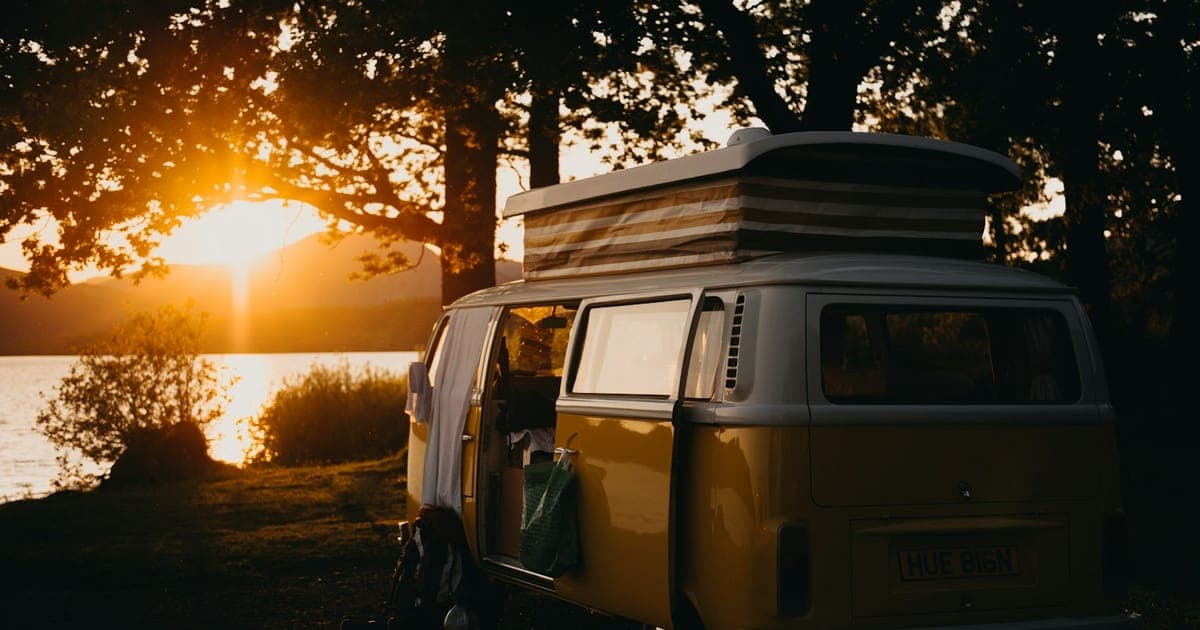
A caravan or motorhome changes that arithmetic completely. A four day gap between a sit in Bendigo and one in Echuca is a short drive and two nights somewhere, not a crisis. Travelling sitters commonly use a low-cost caravan park site or a cabin as a between-sits base, restock and do laundry there, and treat the sits as the comfortable stretches rather than as the only shelter they have. That is the single biggest structural advantage this group has over every other kind of full-time sitter, and it is why the rest of this article treats the van as the centre of the plan.
Where the van goes decides whether you can take the sit at all
Parking is the first question and most listings do not answer it. Ask before you apply, not after you have been accepted, and ask for a photograph of the entry and the parking area taken from the street rather than from the front door.
| Ask this | Why it decides the sit |
|---|---|
| Driveway width, gate clearance and slope | A van that cannot get through the gate cannot stay on the property, and a steep or soft driveway can strand it after rain |
| Turning space and how you get out again | Reversing a long combination onto a busy road at 7am is a different job from rolling forward off a rural drive |
| Total length over the tow hitch | Road rules and councils measure the whole combination including any load or projection, not the body of the van |
| Somewhere legal to leave it for the whole sit | If it cannot stay on the property, the street may not be a lawful substitute for weeks at a time |
| A power outlet, and which kind | A 15 amp van lead is not a 10 amp household socket. Agree whether running the van off the house is acceptable and who is paying for the electricity |
| Overhanging trees, sprinklers and the bin path | Branches, irrigation and the wheelie bin route are the three things people forget until the van is already parked |
| Strata, community title or a shared driveway | Schemes routinely restrict what can be parked on common property or in a visitor bay, and the homeowner may not have checked |
If there is no room on the property, the street is not automatically an option. In the Australian Capital Territory, Access Canberra defines a long vehicle as 7.5 metres or more including any load or projection, and heavy or long vehicles may park on a residential street for only one hour unless a sign permits longer. Other states and territories run their own version of the same rule and individual councils add local restrictions on top of it. Check the council for the suburb you are heading to, because a fine on day three is a poor way to start a month in someone's home.
Get the photo before you commit to the drive
A listing that says there is room for a caravan and a photograph of the actual driveway are two different pieces of information. Ask for the photo, ask what the gate measures, and say your total length in metres rather than describing the van. If the homeowner cannot answer, that is an answer.
Two clear days between sits is the rule that keeps the whole plan standing
The most common way a well-planned run falls apart is a chain of sits booked with same-day handovers several hundred kilometres apart. It works until one homeowner's flight is delayed, one road is closed, or one handover takes three hours instead of forty minutes, and then every remaining commitment on the list is in trouble at once.
Buffer days are not slack. They are the mechanism.
| Gap between sits | What it realistically buys |
|---|---|
| Same day | Nothing. One late homeowner or one closed road and you arrive after dark, tired, to a handover you cannot do properly |
| One day | A transit day, if the drive is short and nothing goes wrong |
| Two to three days | A transit day, a rest day, and room for the owners to come home a day later than planned |
| A week or more | Servicing and restocking the van, seeing the region you drove through, and applying for the sit after next |
There is a road safety argument as well as a logistical one. Transport for NSW reports that fatigue accounts for around 20 per cent of road deaths in New South Wales, and that being awake for about 17 hours has a similar effect on driving as a blood alcohol concentration of 0.05. A long transit day squeezed between a morning handover in Wagga Wagga and an evening arrival in Dubbo is a road safety decision, not a scheduling one.
Arrive the day before, every time
Book the night before a sit starts into a caravan park or a rest stop near the property rather than driving in on the morning of the handover. It turns the handover from something done in travel clothes at the end of a long drive into a proper conversation about the animals.
If a sit does collapse anyway, the recovery steps are in what to do when a house sit is cancelled.
Plan the route around when Australian houses empty, not around the map
Sits appear when people leave. Australian Bureau of Statistics figures show short-term resident returns of 869,410 in December 2025 against 1,665,100 in January 2026, which is the signature of a December departure wave coming home in January. April 2026 was the clear second peak at 1,092,380 returns, roughly 19 per cent above the months either side of it.
Winter is better than most sitters assume. ABS short-term resident departures were 1,150,920 in June 2026, well above the quiet months, which matters if your route already runs north through Queensland and the Northern Territory between June and August. The full month-by-month shape is in off-peak house sitting.
School terms give the summer window a staggered edge that is genuinely useful to a route planner. Queensland and South Australian state schools finish Term 4 on Friday 11 December 2026, with holidays from Saturday 12 December. New South Wales public schools do not finish until Thursday 17 December, and the western division does not return until Wednesday 3 February 2027. A week of difference at the top of the window means a Queensland or South Australian sit can be chained into a New South Wales or Victorian one, rather than competing with it.
Those same peak windows are when a homeowner is most likely to take a chance on a sitter with no reviews yet, which is worked through in getting your first house sit with no reviews.
A rural sit means running the water and the wastewater, not just the pets
Grey nomads take a disproportionate share of regional sits, partly because they are already driving past and partly because those sits are harder to fill. What separates them from a suburban sit is that the property runs its own services, and nobody is coming to fix them for you.
Tank water. NSW Health advises that a properly maintained rainwater tank can provide good quality drinking water, that roof catchments and gutters should be cleared every three to four months, and that tanks should be checked for sediment every two to three years. What matters on a sit is narrower: how much is in the tank now, where the pump switch and its circuit breaker are, what the homeowner does when it gets low, and who delivers water in that area.
Septic and aerated systems. Local government guidance, for example from Sunshine Coast Council, is to use only septic safe products, avoid anti-bacterial ones, and watch for ponding in the land application area, changes in odour, and pumps or alarms failing. In practice you need three things written down: what may go down the drain, what the alarm means, and the name and number of the service agent.
Power. A property on solar with a battery and a back-up generator behaves nothing like a grid connection. Ask what the daily load limit is, what happens on four cloudy days, and whether running the van off the house sits inside that limit or outside it.
Ask what the alarm sounds like
On a property with an aerated wastewater system, a tank pump or a solar battery, there is usually at least one alarm the homeowner has stopped noticing. Ask which alarms exist, what each one sounds like, and who to ring for each. It is a two minute question at handover and it is the difference between a phone call and a failure.
The rest of the regional picture, including distance to a vet, livestock and seasonal risk, is in regional and remote house sitting.
Your caravan is the one thing on the property that is nobody else's responsibility
The homeowner's insurance, alarm and locks are built around their house. Your van is parked at an address you do not own, at a property that is visibly unoccupied for part of most days, and it is your problem alone.
Victoria Police advises parking a caravan or trailer in a well-lit and secure area, locking doors and windows even when you are nearby, keeping valuables out of sight, and using wheel clamps, coupling padlocks, alarms and GPS trackers. It also recommends keeping a list of vehicle identification numbers, serial numbers and registration details, with photographs of valuable possessions, which is the part everyone skips and the part that matters most after a theft.
Whether your caravan is covered while parked at a private residence you do not own is a question for your own insurer and your product disclosure statement, not something a house sitting article can answer for you. Ask them before the trip rather than after. The homeowner's side of the cover question is covered separately in home and contents insurance while a house sitter is in your home.
Say what you drive in the first line of the message, not the fifth
Homeowners reading applications from travelling sitters are deciding a practical question, and they decide it fast. Give them the information that answers it.
- The vehicle: type, total length over the tow hitch, and whether it needs power.
- Where you propose to put it, based on the photo they sent, and that you will move it if it becomes a problem.
- Your arrival plan, including that you intend to arrive the day before for the handover.
- How firm your dates are, and what you would do if their return slipped by two days.
- Your experience with their species, in plain language and without overstating it.
Retirees usually have more evidence than they think, and none of it needs to be a previous house sit: decades of pet ownership, running a household, work references and community involvement all count. How to assemble that into something a homeowner can read quickly is in the house sitting profile that gets replies and building references in Australia.
Match the sit to what you can actually do now
The most useful thing an older sitter can put in a profile is a limit. A sit involving a large energetic dog, steep internal stairs, twenty kilogram feed bags, an acre of lawn or twice-daily medication is not a worse sit, but it is a specific one, and taking it because it looked good on the listing is how people end up exhausted and resentful three days in.
On a long sit, distance to a pharmacy, a GP and a hospital is a practical question rather than a delicate one. Ask it plainly.
The other limit is the animals, not you. Grey nomads generally want to see the region they are sitting in, and the honest constraint is how long the pets are used to being left. The RSPCA Knowledgebase notes that dogs are highly social animals that generally prefer to live in groups, and that separation can produce real distress. Ask the owner what the animals actually cope with, treat the answer as a limit rather than a starting position, and plan day trips around it. Sits with older or anxious animals need more of this thinking, and that is covered in sitting for senior pets.
For homeowners, saying you have room for a van costs you nothing
If there is off-street space for a caravan or motorhome, put it in the listing. It is a genuine differentiator for a group that is often available at short notice, willing to take a month or more, frequently travelling as a couple so the animals are rarely alone, and specifically interested in regional locations that are otherwise hard to fill.
Two things not to assume. Do not assume less technical confidence: many travelling retirees run their entire life from a phone, including banking, navigation and remote work. And do not assume unlimited physical capacity: if the sit involves a big dog, steep stairs or heavy garden work, say so plainly in the listing, as you should for any sitter. Writing that up is covered in how to write a house sitting listing.
What this article deliberately does not cover
A long stay, particularly one where a bond or a contribution to bills has been discussed, raises a legal question about what status the sitter has in the property. Whether a house sitter acquires occupancy or tenancy rights in Australia varies by state and territory and is outside what this article covers. Your state or territory consumer affairs or fair trading body is the place to start, and a solicitor if money or a bond is involved.
It is also worth being clear about where Sitterly sits. Sitterly supports the connection. Homeowners and sitters remain responsible for their own arrangements. Email verification is automatic, a police check is optional and user-initiated, and homeowners can filter for it, but Sitterly does not vet or approve every user, does not provide insurance, does not supervise sits and will not find a replacement if an arrangement falls through. Choosing who parks in whose driveway is a decision that stays with the two of you, and the terms worth writing down first are in the house sitting agreement guide.
Grey nomad house sitting questions
- Do grey nomads get paid to house sit in Australia?
- Not on the exchange model. No money changes hands for the sit and there is no per-booking commission. What you receive is the accommodation, and what the homeowner receives is their pets cared for at home. A separate paid pet sitting market exists in Australia where a sitter charges a nightly rate and usually keeps their own home, and the two are different arrangements that get confused constantly.
- Can you house sit and sleep in your own caravan instead of the house?
- It happens on some rural Australian listings, and it is a different arrangement from a house sit, where the sitter lives in the home. If that is what is being proposed, settle it in writing before you drive: which parts of the house you may use, whether the bathroom and laundry are available, what the arrangement is in a storm or a heatwave, and what happens to the pets overnight.
- How far ahead should I be lining up sits?
- Further than feels necessary for the December to January window and the school holidays, and much less far for February and the shoulder months, when sits are quieter and homeowners are more flexible. Whatever the lead time, leave two clear days between one sit ending and the next starting.
- Is a caravan a problem for homeowners?
- Usually the opposite, because it means you are self-contained and have somewhere to go if plans change. What homeowners worry about is narrower and more practical: the driveway, the lawn, the neighbours and whether their strata scheme has something to say about it. Answer those three in your first message and the van stops being a question.
Your next step is one message, not a whole route
Open the listings, filter to the states your route already crosses, and message the two or three where the parking question has an obvious answer. You do not need the whole year mapped to start. You need one sit, two clear days on either side of it, and a homeowner who knows how long your van is before you arrive.
Browse open sits across Australia, or create a sitter profile that says what you drive in the first line.