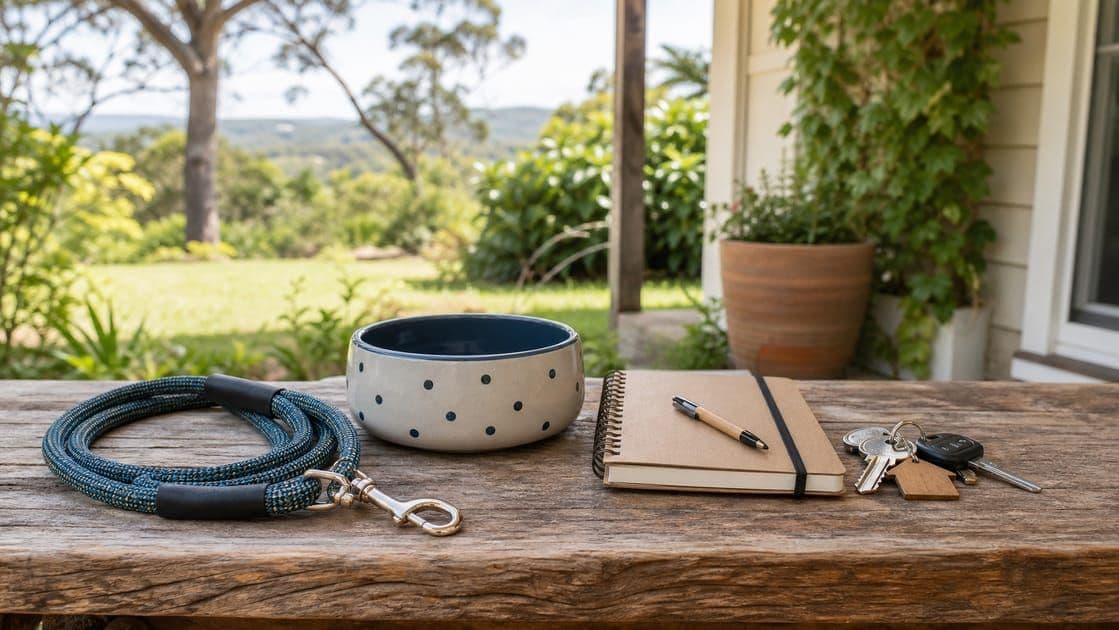
A house sit is usually the gentler arrangement for a dog with separation-related anxiety, because the dog stays in its own home, on its own routine, with someone there overnight. The advantage is not automatic. It comes from the handover: two or three introductions rather than one, an overlap night with you and the sitter in the house together, a written record of the triggers and what already helps, and a sitter who keeps your timetable instead of improvising a better one. A sit does not treat the anxiety, and for some dogs it is the wrong arrangement altogether.
Anxiety when you leave is about you being gone, not about the house
RSPCA Australia's guidance on a dog that is anxious when nobody is home, last updated 6 September 2022, frames it precisely: the goal of management and treatment is to teach the dog to be calm and relaxed when the person to whom the dog is attached is absent. The attachment is to a person, and no arrangement supplies that person.
What a sit removes is the second stressor stacked on the first. Boarding asks an already anxious dog to lose you, the house, the smells, the routine and the quiet in one afternoon. The RSPCA's page on choosing a boarding facility, last updated 14 June 2023, names a pet sitter who will come and stay at your home as the alternative for an animal stressed by change or by other animals.
The separation-anxiety page also lists what to expect: toileting in the house, destructiveness, excessive barking, digging or pacing and attempting to escape. A sitter told none of that reads it as a badly behaved dog. Our comparison of house sitting against boarding covers the wider choice.
Speak to your vet before you book the trip, not after the sit goes wrong
The RSPCA's advice is to consult your veterinarian, who can help directly or refer you to a behavioural specialist using humane reward-based training, and it notes that in severe cases vets may suggest a combination of pharmaceutical medication and behavioural modification or training. Which applies here is for the vet who knows the animal. Ask whether a fortnight with an unfamiliar person is reasonable for this dog, and ask for anything the sitter needs in the clinic's words rather than yours.
This article does not recommend treatments
No medication, supplement, calming product or behaviour programme is recommended here. Anything to do with your dog's anxiety comes from the veterinarian who treats them.
Introduce the sitter across three visits, not one
One brief meeting is enough for a confident dog and not enough for this one. Let the dog set the pace each time.
| Visit | When | What happens | What you are watching |
|---|---|---|---|
| First | Two to three weeks out | Half an hour. The sitter sits, talks to you, ignores the dog | Whether the dog settles with a stranger in the room |
| Second | One to two weeks out | An hour. The sitter moves about the house and watches the feed | Whether the dog follows the sitter or stays glued to you |
| Third | The week of the sit | A walk with the sitter on the lead, then a coffee at home | Whether the dog takes direction outside |
A dog worse at the third visit than the first is information to act on, and a reasonable point to ring the vet.
The overlap night is the single most useful thing you can arrange
Have the sitter arrive the day before you leave and stay the night. The dog sees you and the sitter in the house together, eating, moving about and going to bed, which does more to establish the sitter as safe than any amount of written instruction. The first morning routine also happens once with you there to correct it.
If an overlap night is not possible
Hand over across two or three hours on the morning you go, with the walk and the first feed done by the sitter while you are still there. Ask about the extra night in your first message, not your last.
Write the anxiety down, because a stranger cannot infer it
Keep this on its own page so it is not buried under bin night.
| What to record | Write it like this |
|---|---|
| The triggers | Keys off the hook, shoes on in the hallway, a bag by the door |
| What it looks like | Pacing the hallway, drooling on the tiles, barking ten minutes after the car leaves |
| Tolerance for being alone | Four hours on a weekday. Six once, and we came home to a chewed doorframe |
| What already helps | Radio on low, laundry door open, a stuffed toy that takes half an hour |
| What made it worse | Being shut in the bedroom. Long goodbyes. A new person walking her on day one |
| The never list | Never crate her. Never leave the side gate unlatched |
Feed amounts, medication times and vet numbers belong in the pet care handover notes instead.
Reward-based is the RSPCA's position, and a sit is not the time to try anything new
The RSPCA states that reward-based training, last updated 15 June 2022, is the most humane and effective way of training dogs and addressing unwanted behaviours, and does not involve aversive techniques, physical punishment or the assertion of dominance. Its fireworks guidance puts the same rule in a line: do not punish a dog showing fear and distress.
Three practical points follow, all from the RSPCA's own separation guidance. Ignore the dog for 15 to 30 minutes before leaving. On returning, greet softly, calmly and quietly, and attend to the dog only once it is calm. And each time the owner leaves, offer a stuffed food toy that takes at least 20 to 30 minutes to get through, which our guide to chew and enrichment safety covers choosing.
What a sitter should not do is start something: not a training programme, not a longer stretch alone to test whether the dog has improved, not a new crate.
Brief the sitter on fireworks before New Year's Eve
A dog in Balmain hears the harbour, a dog in South Perth hears Elizabeth Quay, and a dog in Kensington hears the Docklands display whether anyone is watching or not.
RSPCA guidance on pets during fireworks displays, last updated 25 September 2023, recommends talking to your vet well before the event, keeping the dog indoors with the blinds closed, offering a hiding place it can choose to retreat to, masking the noise with soft music or the television, and never tethering a dog or using a choke chain, because dogs who panic can choke themselves on a collar or lead. Check the microchip details and the ID tag, because this is the night dogs get out. The Australian Veterinary Association's Vet Voice, in its six tips for pets and fireworks published 10 December 2018, adds one worth putting to a sitter directly: consider staying home with a pet that is particularly afraid. Our Christmas pet care planning guide covers the rest of the season.
Barking is a council matter, and your sitter answers the door
The RSPCA lists excessive barking as a distress sign. Councils do not draw that distinction. Service NSW's page on reporting a nuisance dog or cat states that a dog is a nuisance dog if it makes persistent, excessive noise, that a council may issue a nuisance dog order where it identifies a serious or ongoing problem, and that penalties may apply if the order is not complied with. Rules differ by state and territory, and your council is the authority for your address.
So tell the neighbours either side who is staying and for how long, and swap numbers between them and your sitter. A neighbour who knows the dog is not abandoned rings the sitter. One who does not rings the council.
Sometimes a sitter is not the answer
Sitterly takes no commission on a sit, so there is no reason here to talk anyone into one.
| The situation | What usually suits better | Why |
|---|---|---|
| The dog cannot be left for more than a few minutes | A sitter who will be home most of the day, said plainly in the listing | Many sitters have work or study commitments, so ask directly how much of the day they will be in the house |
| The anxiety is new, escalating or unexplained | A vet appointment before the trip is confirmed | The RSPCA's first step is the veterinarian, not the arrangement |
| Post-surgical care, or medication needing overnight monitoring | Boarding with staff on site, or your vet clinic | One sitter is asleep at three in the morning. Staff on shift are not |
| The dog is reactive to strangers, or has bitten | Whatever your vet or a behavioural specialist recommends | A stranger in the house is the trigger, not the solution |
Choosing boarding for a dog like this is not a failure of nerve. Our guide to keeping a dog at home while you are away sets out the alternatives, and arranging care for a senior pet covers the animals most often in the same position.
What Sitterly does and does not do here
Sitterly does not vet, screen or approve anyone, and cannot tell you whether a sitter suits an anxious dog. Verification is optional and member-initiated: email verification is automatic, while a police check is completed by choice and reviewed by our admin team. You can filter the sitter list by it, though neither says anything about how someone handles a dog that panics. What does help is messaging people directly, describing the dog with the bad days included, and putting the anxiety in the listing rather than saving it for the handover, which writing a listing that gets the right replies covers. A sitter who says no in advance has done you a favour.
“Sitterly supports the connection. Homeowners and sitters remain responsible for their own arrangements.”
- Sitterly, About page
Common questions about sitting for an anxious dog
- Is a house sitter better than boarding for a dog with separation anxiety?
- Usually, because the dog keeps its home, its routine and an overnight presence, and the RSPCA names a sitter who stays at your home as the alternative for an animal stressed by change or by other animals. It does not treat the anxiety, and a dog needing overnight monitoring can be safer elsewhere.
- What if the dog does not settle once I have gone?
- Agree the plan before you leave: when the sitter contacts you, what your vet has already said, and who locally can attend within the hour. Knowing there is a plan is what makes a sitter raise it on day two instead of hoping it improves by day six.
Find a sitter near you
Say what your dog is actually like in your first message, not your third. Browse sitters near you, or post your dates on the listings board and let people comfortable with an anxious dog come to you. Listing is free for homeowners, and no money changes hands for the sit.
General information only, not veterinary or behavioural advice. Separation-related anxiety belongs with the veterinarian who treats your dog. RSPCA and Australian Veterinary Association guidance is quoted with the date each page was last updated or published, and nuisance animal rules differ between states, territories and councils.